Multichannel is not omnichannel
Every helpdesk claims omnichannel support. Most deliver multichannel — multiple channels that operate in silos.
The difference matters:
Multichannel: A customer emails about an issue. Later, they call. The phone agent has no context. The customer repeats everything. Two separate tickets exist for the same problem.
Omnichannel: A customer emails about an issue. Later, they call. The AI already knows the context. The conversation continues seamlessly. One thread, one ticket, one resolution.
Most helpdesks bolt channels together. Email was first. Chat was added. Phone was added as a separate product. Each channel has its own queue, its own routing, its own data model. The "omnichannel" label means they all appear in the same inbox — but the intelligence is not shared.
Aurion CS was built differently.
One AI, every channel
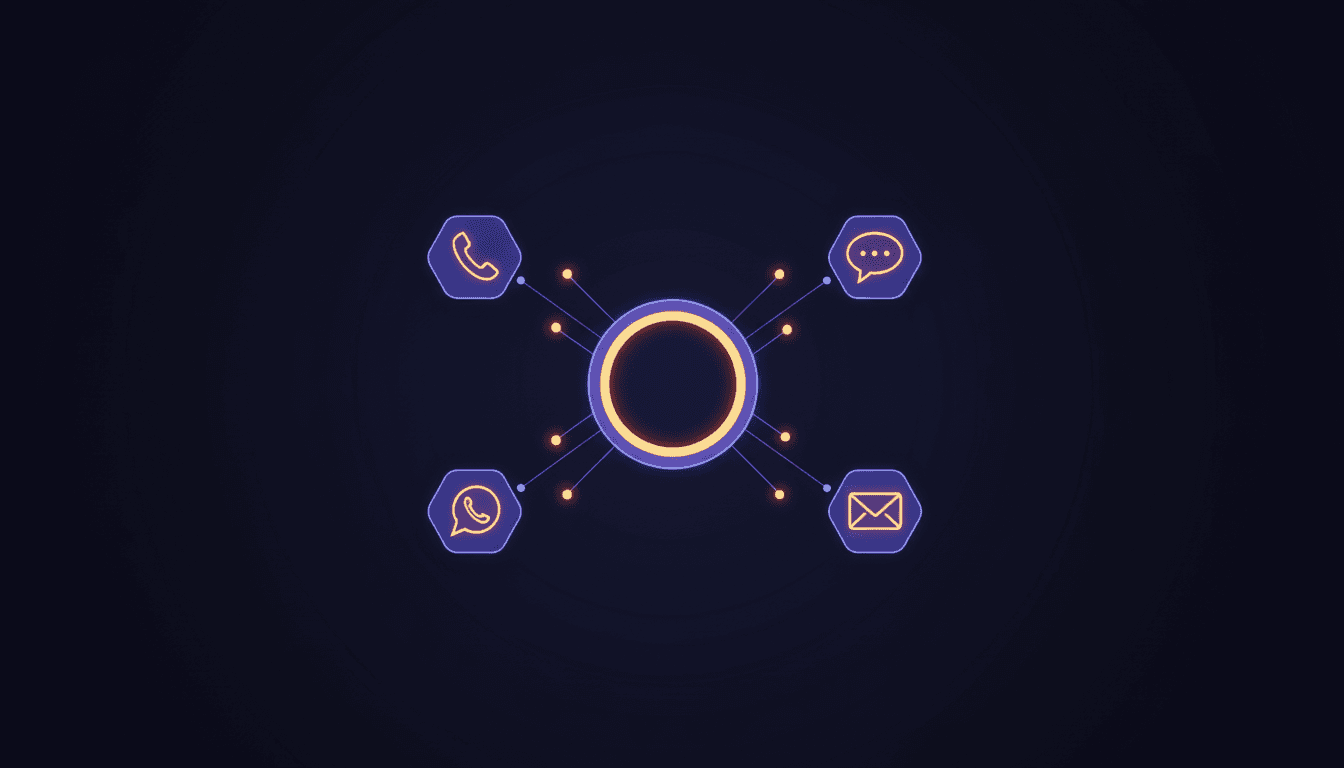
The core architectural decision behind Aurion CS is a single AI engine that powers every channel:
Customer calls  →  Speech-to-Text  →
Customer chats  →  Text input      →  Same AI Engine  →  Same Tools  →  Same KB
Customer emails →  Text input      →                     Same Inbox
Customer WhatsApp → Text input     →
The AI does not have a "chat mode" and a "voice mode." It has one mode: understand the customer, search the knowledge base, take action with tools, and resolve the issue. The channel is just the transport layer.
This means:
- Same knowledge base. An article that resolves a chat question also resolves a phone call about the same topic.
- Same tools. The AI can create tickets, search contacts, check status, and escalate — regardless of whether the customer typed or spoke.
- Same categorization. Intent detection, priority assignment, and routing logic are channel-agnostic.
- Same conversation history. A customer who chats on Monday and calls on Wednesday has one conversation thread.
The four channels
Voice calls
The channel most helpdesks cannot automate. Aurion CS's voice AI answers phone calls with sub-second response latency:
- SIP trunking for traditional phone numbers
- WebRTC widget for browser-based calls
- Mobile app for on-the-go voice support
- 11 languages with automatic detection from speech
- Caller authentication via phone number lookup + identity verification
The AI handles the full conversation — no IVR menus, no hold music, no transfer queues. Common issues are resolved during the call. Complex issues result in a properly categorized ticket with the full transcript attached.
Chat widget
An embeddable JavaScript widget for any website. One script tag, no coding required:
- AI-powered responses from the knowledge base
- Live handoff to human agents when needed
- Rich media support (images, files)
- Conversation continuity across sessions
The widget is built with Preact for minimal bundle size. It loads asynchronously and does not affect page performance.
The original support channel, enhanced with AI:
- AI reads and categorizes incoming emails automatically
- Draft responses generated from KB articles and conversation context
- Agents review and send — the AI assists, the human decides
- Automatic ticket creation and routing based on content
No more manually tagging, categorizing, or prioritizing emails. The AI handles triage; agents handle resolution.
WhatsApp Business
WhatsApp is the preferred messaging channel in most of the world. Aurion CS integrates via the WhatsApp Business API:
- Embedded OAuth signup — connect your WhatsApp Business account directly from the dashboard
- Template messages — create, sync, and send approved message templates
- Rich media — images, documents, and video in both directions
- Unified inbox — WhatsApp conversations appear alongside chat, email, and voice
The unified inbox
All four channels converge in one inbox. An agent sees:
- Chat messages, emails, voice transcripts, and WhatsApp messages in a single timeline
- Customer profile with full interaction history across all channels
- AI-drafted responses ready for review
- Ticket status, SLA timers, and priority indicators
There is no switching between tabs, no separate queue for phone calls, no different interface for WhatsApp. One inbox, one workflow, one set of keyboard shortcuts.
Conversation threading
When a customer contacts support through multiple channels, the conversations are linked:
- Customer sends an email about a billing question → Ticket #1234 created
- Customer calls the next day about the same issue → AI finds ticket #1234, continues the conversation
- Customer sends a WhatsApp message asking for an update → Same thread, same ticket
The agent sees the complete story. The customer never repeats themselves.
Why voice changes everything
Chat, email, and WhatsApp are text channels. Adding them to a helpdesk is a solved problem — most platforms handle it well.
Voice is different. Voice requires:
- Real-time processing. A 2-second delay in chat is invisible. A 2-second delay on a phone call is awkward.
- Speech-to-text. Converting spoken words to text accurately, in multiple languages, with background noise.
- Text-to-speech. Converting AI responses to natural-sounding speech. Not robotic TTS — conversational voice.
- Turn-taking. Knowing when the caller has finished speaking and when to respond.
Aurion CS solves each of these:
- Sub-second latency end-to-end (speech → AI → speech)
- Whisper STT with semantic turn detection
- Cartesia TTS with natural, multilingual voices
- Semantic VAD that understands conversational pauses
This is why most helpdesks do not offer voice AI. It is technically difficult and requires a different architecture than text-based channels. Aurion CS was built with voice as a first-class channel from the start.
Omnichannel analytics
When all channels share the same data model, analytics become powerful:
- Channel distribution — what percentage of conversations arrive via chat vs email vs phone vs WhatsApp
- Resolution rates by channel — which channels resolve fastest
- AI resolution rates — how often the AI resolves without human intervention, per channel
- Cross-channel patterns — customers who start on chat and escalate to phone (indicates chat is not resolving their issue type)
- SLA compliance across all channels in one dashboard
These insights help you optimize channel strategy. If 40% of your volume is phone calls and the AI resolves 60% of them, you know voice AI is saving your team significant time.
Getting started
Aurion CS's omnichannel setup takes minutes, not weeks:
- Email — connect your support email address in the dashboard
- Chat — copy the widget script tag to your website
- Voice — configure your support phone number via SIP
- WhatsApp — connect via embedded OAuth in the dashboard
All four channels start routing to the unified inbox immediately. The AI begins working on every channel — no separate AI configuration per channel.
Start with the free tier to evaluate. Add channels as you go. The AI works the same way on every channel you enable.
Request a demo to see omnichannel in action across all four channels.
Usein kysytyt kysymykset
- What channels does Aurion CS support?
- Aurion CS supports voice calls (SIP + WebRTC), live chat (embeddable widget), email, and WhatsApp Business. All channels flow into a single unified inbox. The same AI powers every channel.
- Can a customer start on chat and continue by phone?
- Yes. Aurion CS maintains conversation context across channels. If a customer chats about an issue and then calls, the AI has the full history. The agent sees the entire conversation timeline in one place.
- How does voice AI work differently from chat AI?
- The underlying AI is the same — same LLM, same tools, same knowledge base. The difference is the interface: voice uses speech-to-text (Whisper) and text-to-speech (Cartesia) for sub-second voice conversations. Chat and email use text directly. The AI's capabilities are identical across all channels.
- Does Aurion CS support WhatsApp?
- Yes. WhatsApp Business API integration includes embedded OAuth signup, template message management (create, sync, send), and rich media support (images, documents, video) in both directions. WhatsApp conversations appear in the unified inbox alongside other channels.
- What is the difference between multichannel and omnichannel?
- Multichannel means offering multiple channels (email, chat, phone). Omnichannel means those channels share context — one conversation thread, one customer profile, one AI. Most helpdesks are multichannel. Aurion CS is omnichannel: the AI, inbox, and customer data are unified across all channels.